Design Concept and Site Integration
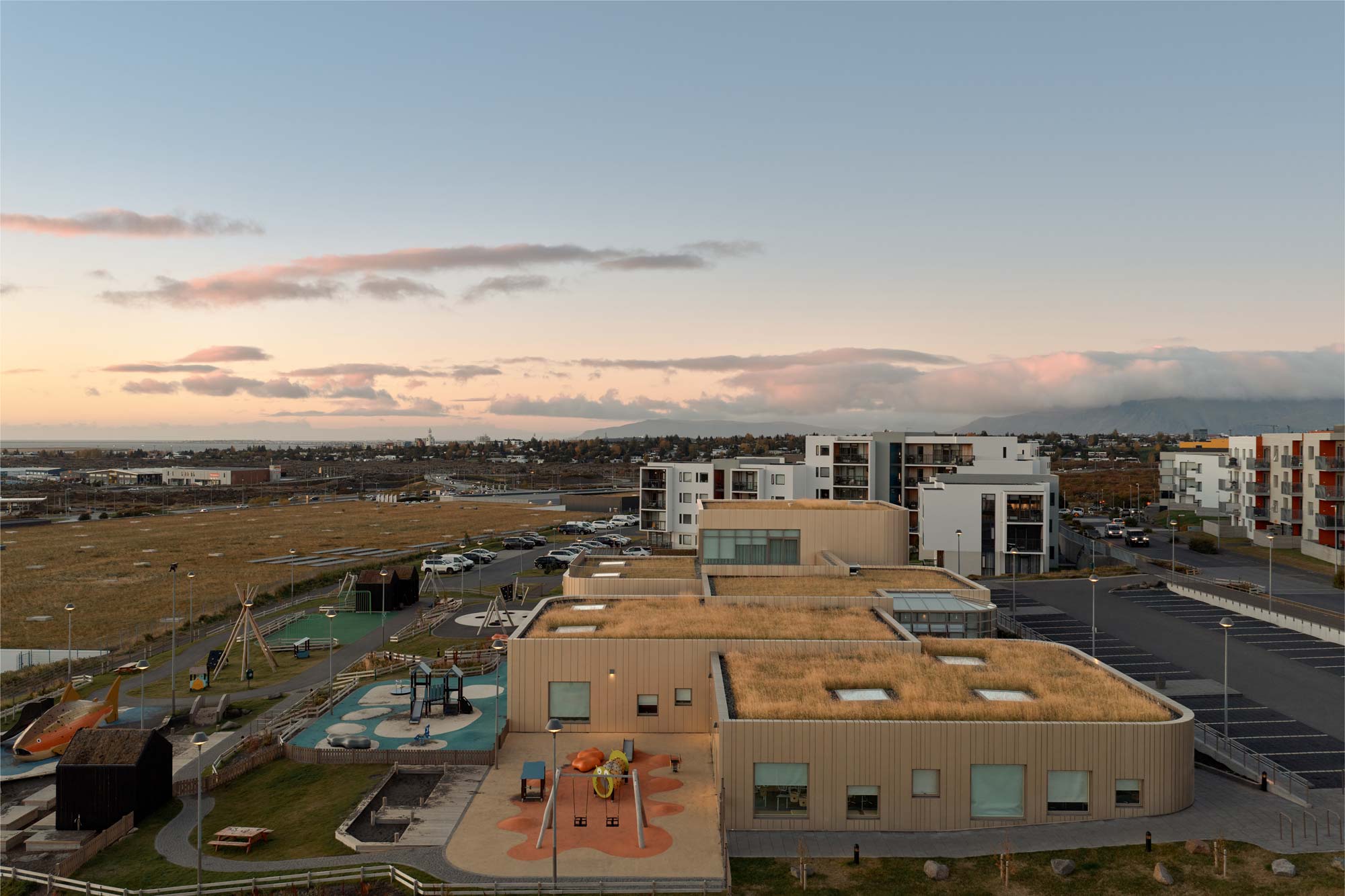
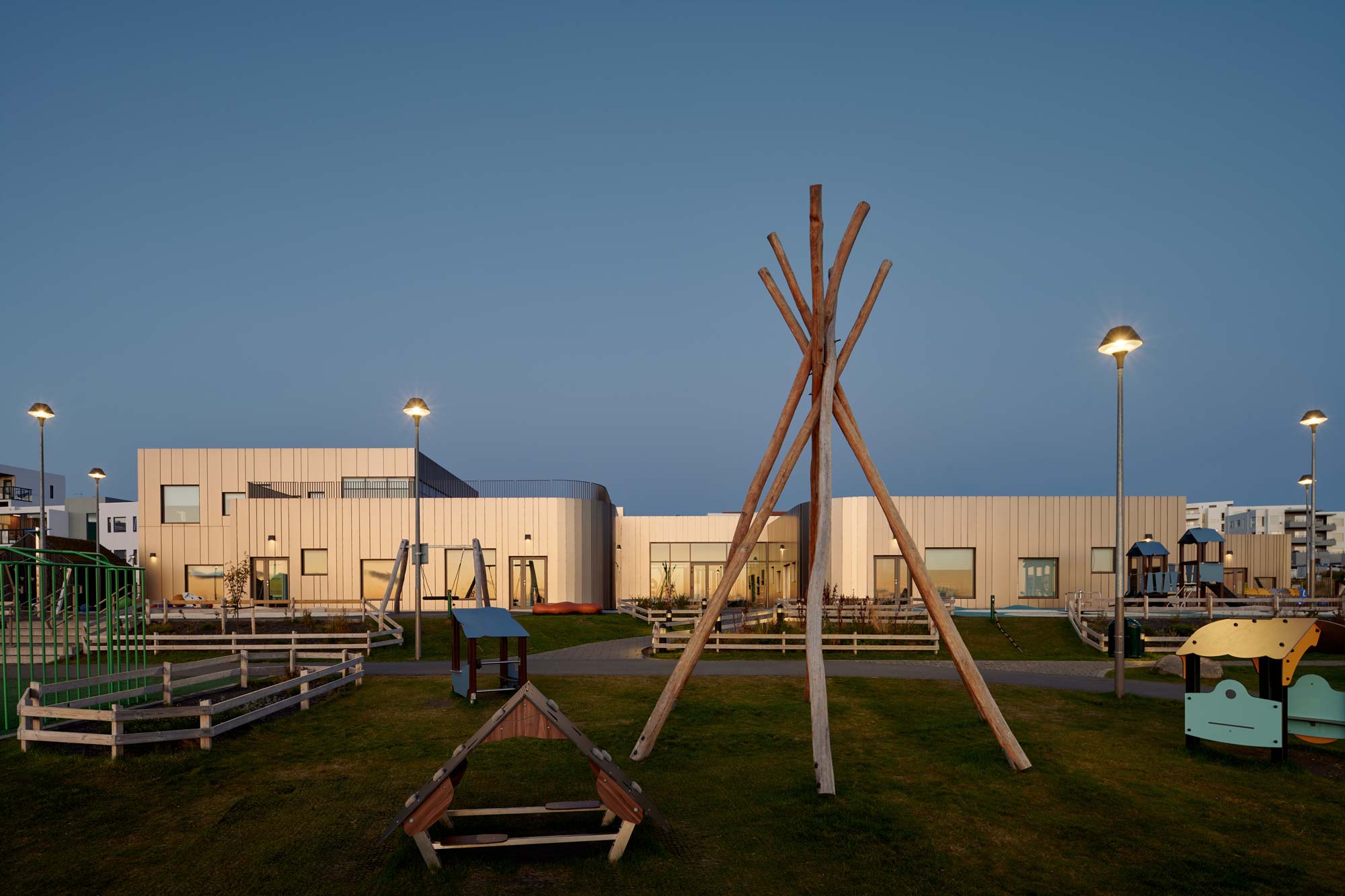
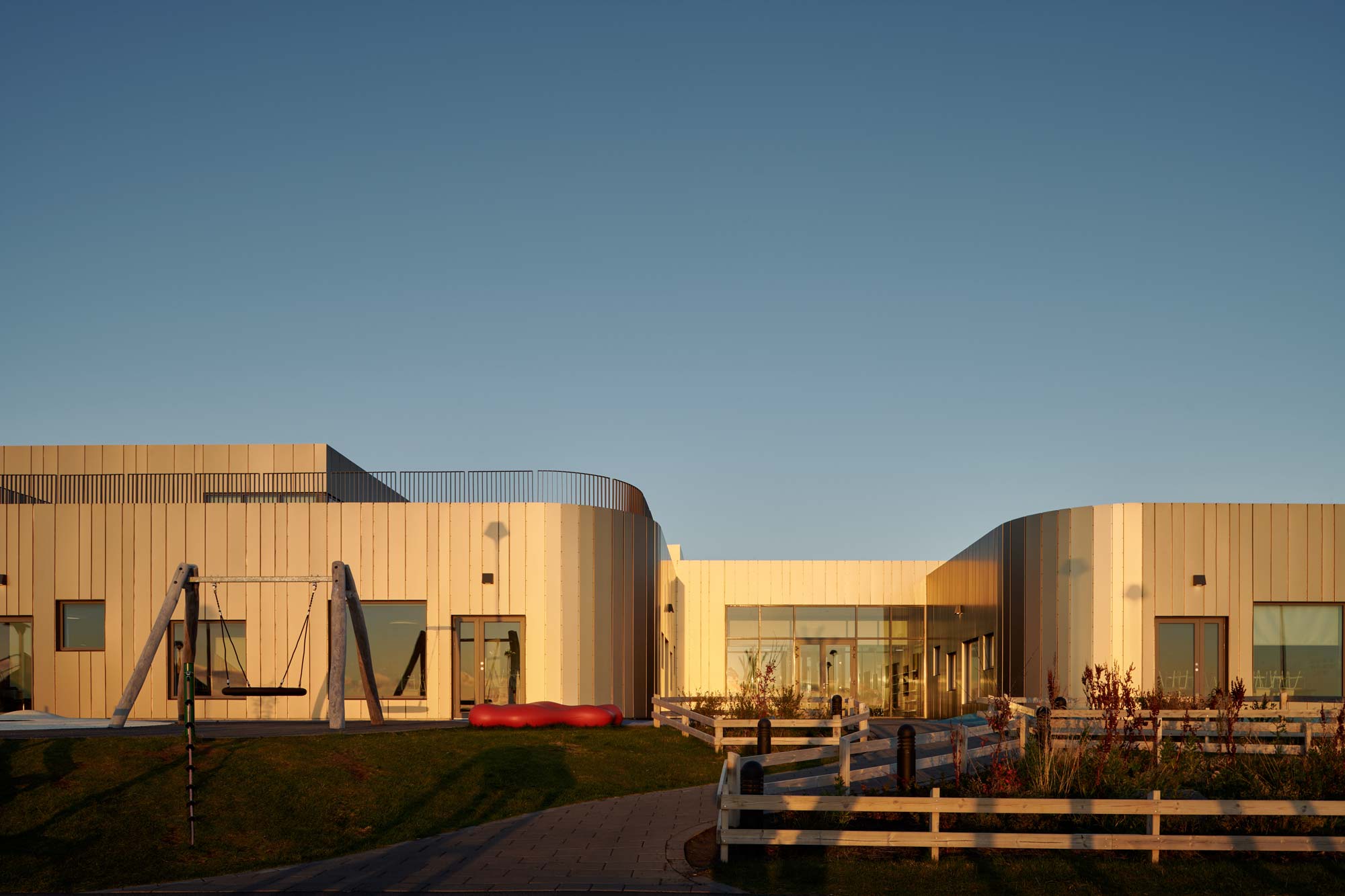
The design responds directly to the site’s natural slope and steps the building down gradually. As a result, all children’s facilities sit on a single floor, which improves accessibility and simplifies movement throughout the building.
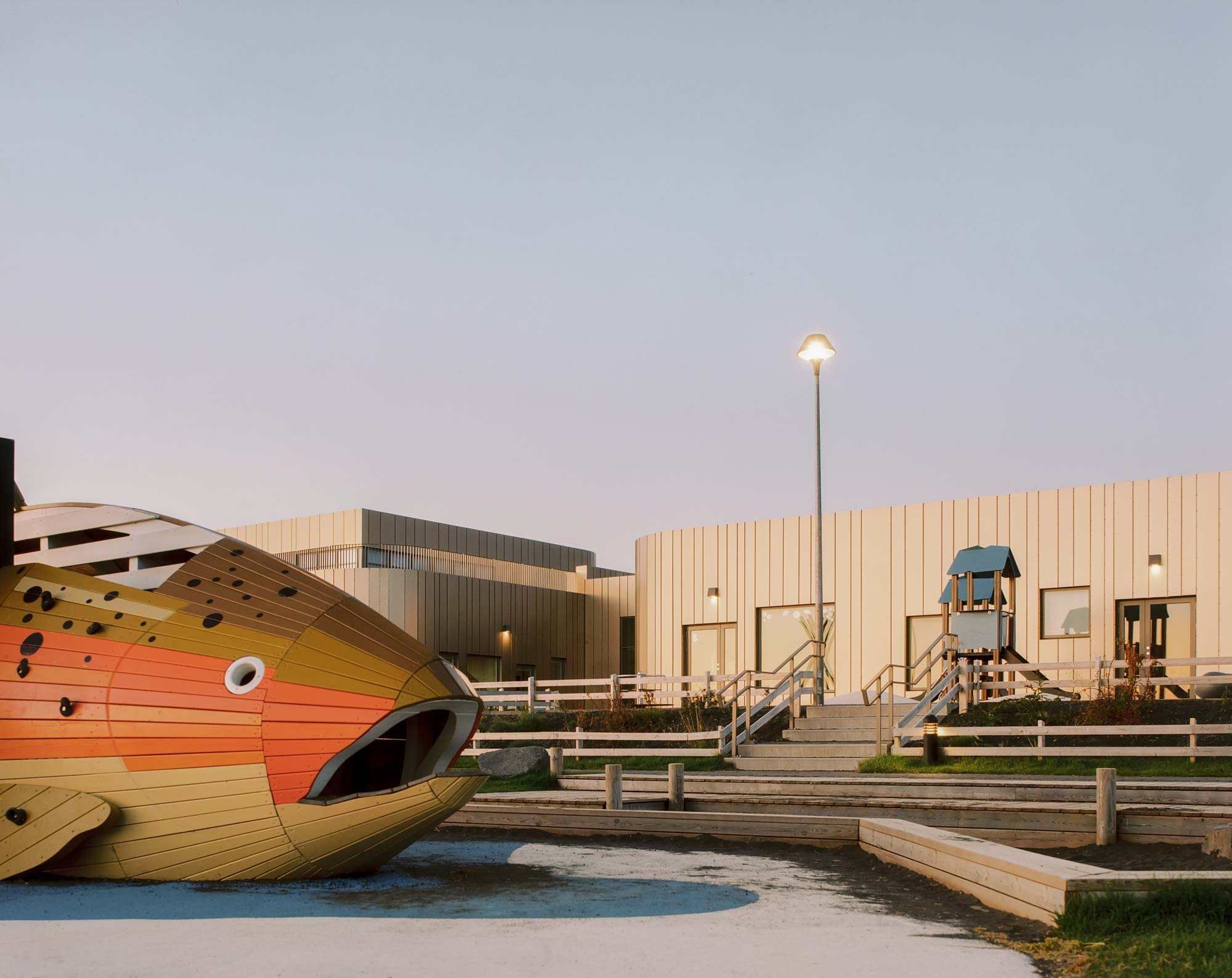
Moreover, the design strongly emphasizes outdoor access. For this reason, every homeroom connects directly to both indoor and outdoor playgrounds, encouraging children to interact with nature every day.
Massing, Light, and Spatial Experience
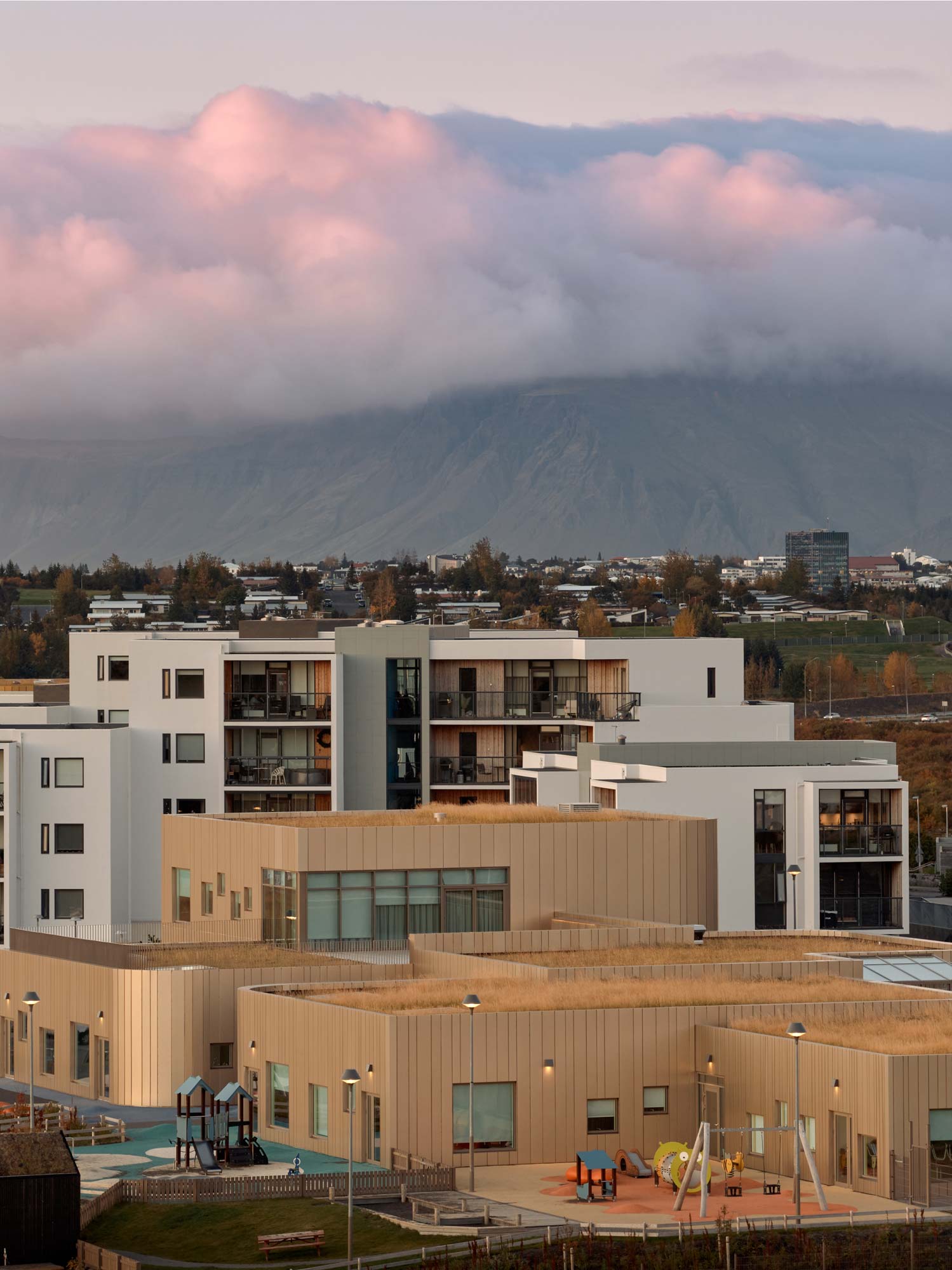
To maximize sunlight, the building mass increases toward the north. At the same time, the architecture grows with the children. As they get older, ceiling heights increase, which supports spatial awareness and personal development.
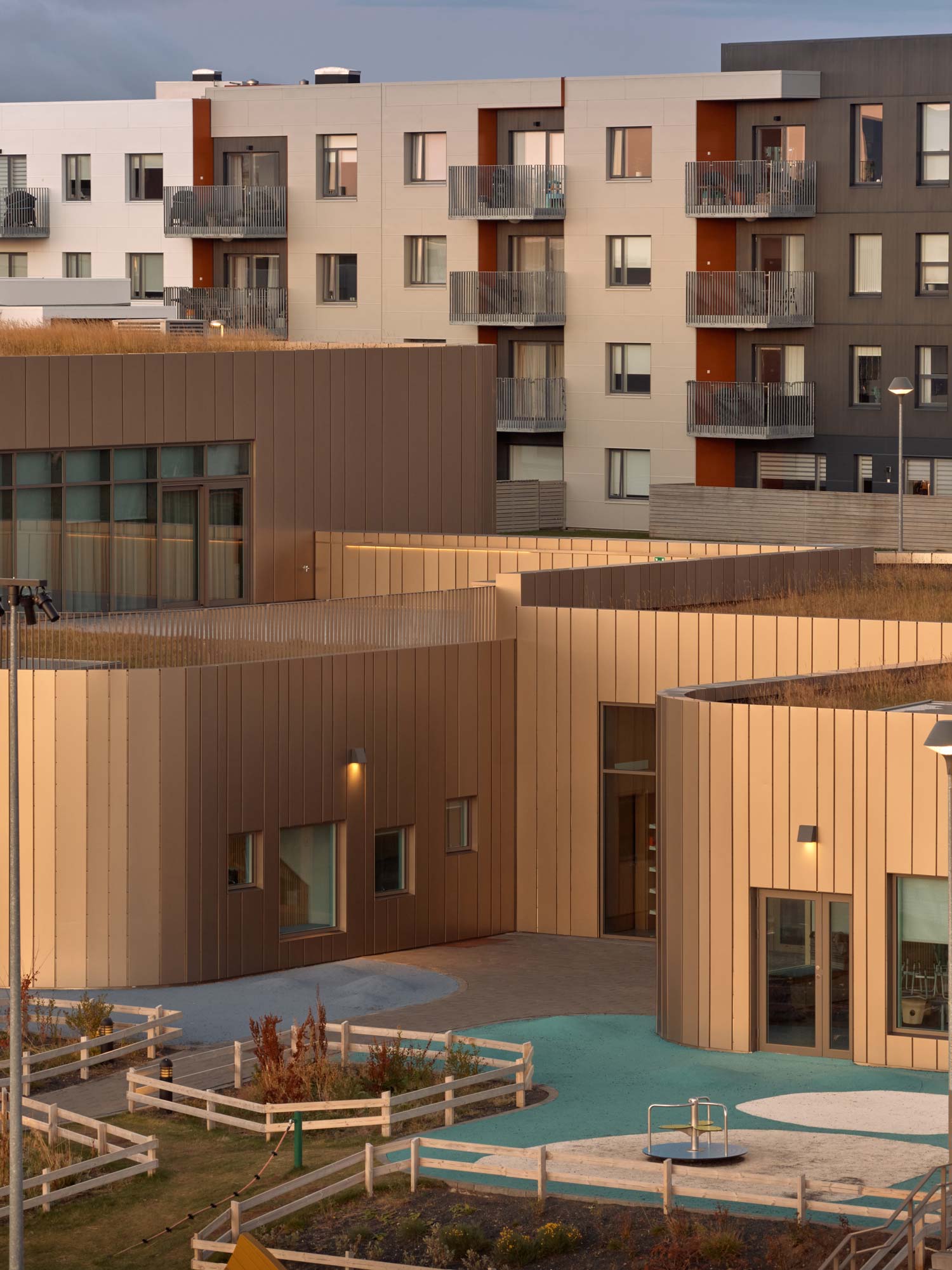
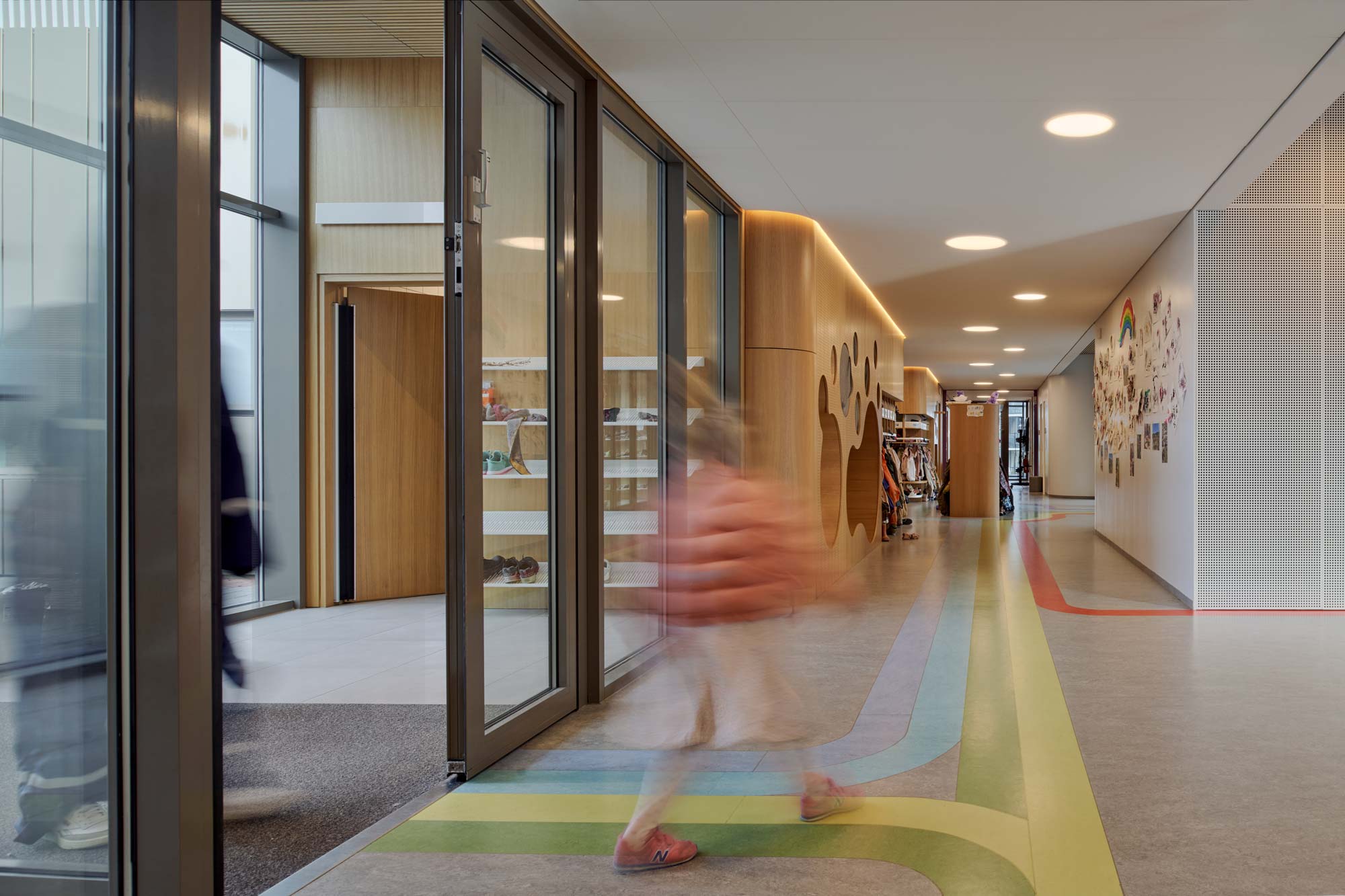
In addition, the design breaks the building into smaller, child-scale volumes. Therefore, children can easily recognize and relate to each space. Instead of traditional corridors, circulation follows a central axis that opens onto shared areas. Consequently, learning and play remain visually connected and accessible.
Learning, Safety, and Sustainability
Overall, the concept creates a safe, warm, and stimulating environment. Furthermore, both the building and the surrounding landscape actively support learning and play.
Equally important, the design encourages environmental awareness through hands-on experiences. For example, children learn by working, exploring, and interacting with their surroundings.
Food, Materials, and Construction
The design highlights the food cycle as a key learning tool. Specifically, the kitchen and greenhouse remain visible from the multi-purpose hall. Additionally, a dedicated farming area allows children to experience food production from cultivation to waste sorting.
Finally, the project prioritizes sustainable materials and efficient construction. Environmentally friendly concrete supports the foundations, while cross-laminated timber forms the main structure and performs well in earthquake-prone areas. Meanwhile, lightweight interior partitions allow flexibility and ensure the building can adapt to future needs.
Garðabær – IS