

Contemporary architecture in Iceland has developed in close response to climate, landscape, and light. From the second half of the 20th century to today, buildings have become simpler in form, more careful in material choice, and closely connected to their surroundings. Rather than focusing on decoration, modern Icelandic architecture is defined by clarity, function, and balance with nature.
Clean lines, restrained colours, and exposed materials shape many contemporary buildings across the country, both in urban Reykjavík and in more remote areas. Weather, daylight, and long-term durability are constant factors in how architecture is designed and built.
For this reason, documenting contemporary architecture in Iceland requires more than standard architectural photography. Buildings are often meant to be read together with their environment, and light and weather can change quickly. In this article, we look at the main trends in contemporary Icelandic architecture and how architectural photography can communicate their material, scale, and atmosphere.
Nordic Modernism in Icelandic Architecture
Nordic modernism emerged across Scandinavia after the 1930s and became widely adopted in the post-war period. It was grounded in a clear idea: architecture should support everyday life and respond to the realities of northern climates. Design choices were guided by function, durability, and clarity rather than decoration.
The Scandinavian modernist approach was shaped by a few key principles:
- Function before form: buildings were designed around daily use rather than visual effect.
- Clear and readable volumes: simple shapes that are easy to understand from the outside.
- Honest use of materials: concrete, wood, and glass were left visible instead of being hidden or overfinished.
- Careful use of daylight: window placement and orientation were planned to bring natural light into interiors.
- Human scale and social focus: spaces were designed to feel practical, comfortable, and part of everyday life.
These ideas spread across Nordic countries but were always adapted to local conditions, shaped by climate, materials, and landscape.
How Nordic Modernism Was Adapted in Iceland
When Nordic modernist ideas reached Iceland, they were adapted rather than copied directly. The focus on everyday life remained strong, with interiors designed for comfort, clarity, and ease of use instead of formal appearance. Natural light continued to be central, and window placement was carefully planned to bring daylight deep into interiors during long winter months.
At the same time, modernism in Iceland became more solid and pragmatic. Design ideas were constantly filtered through weather exposure, geographic isolation, and long-term maintenance needs, resulting in a more robust and grounded architectural language.
In practical terms, this adaptation can be seen in several recurring choices:
- Materials: concrete became the dominant material due to its durability and resistance to harsh weather
- Construction logic: thicker walls and, in some cases, smaller openings helped protect interiors from wind and cold
- Urban context: buildings often stand more independently rather than forming dense urban blocks
- Relationship with landscape: greater attention is given to how buildings sit in open space and relate to the horizon
A clear example of this reinterpretation is Hallgrímskirkja, the large Lutheran church that defines Reykjavík’s skyline. Designed in 1937 by state architect Guðjón Samúelsson, the building follows modernist principles while drawing directly from Iceland’s natural environment. Its stepped concrete façade and vertical rhythm echo the form of basalt columns found in the Icelandic landscape.
The result is a building that feels monumental yet restrained, structural rather than decorative. This balance between clarity, direct use of materials, and strong presence is typical of how modernism was adapted in Iceland.

Photography Considerations
When photographing Nordic modernist architecture in Iceland, I work with a precise and restrained approach. These buildings don’t depend on visual effects or strong gestures, but on proportion, structure, and how light defines space. My role as a photographer is to make these qualities perceptible, without adding anything unnecessary.
In practice, this means focusing on a few clear choices:
- keeping vertical and horizontal lines exact
- working with soft daylight to describe volume rather than strong contrast
- avoiding dramatic angles that would distort scale
- showing how spaces connect instead of isolating individual details
These considerations shaped how I photographed Súluhöfði, a single-family house by Trípólí Architects set in a secluded fjord on the outskirts of Reykjavík. The project is based on a “seen-through” concept, with large openings that frame views across the water and connect interior spaces to the landscape. While photographing the house, these sightlines guided the compositions, allowing the fjord to remain part of the architectural reading.
The limited material palette-mainly concrete and wood-requires careful exposure and neutral colour handling so texture and weight remain visible without becoming dominant. Timing and light are essential, as the relationship between interior and exterior shifts throughout the day. Rather than isolating the building as an object, the images focus on how it sits within its environment, reflecting a core idea shared by Nordic modernism and contemporary Icelandic architecture.


Icelandic Contemporary Minimalism
In Iceland, contemporary minimalism is less about style and more about restraint. Buildings are reduced to what is necessary, both in form and material, allowing landscape, light, and atmosphere to take a central role. This approach reflects a desire for calm, simplicity, and long-term use rather than visual impact.
Minimalism as a Response to Landscape and Lifestyle
Climate, remoteness, and construction practicality strongly influence how minimalism is applied, resulting in buildings that feel grounded and purposeful rather than abstract.
In practice, this approach is expressed through:
- Simple volumes and clear geometries, easy to read within open landscapes
- Limited material palettes, often wood, metal, and concrete, chosen for durability and low maintenance
- Careful use of daylight, with large openings that bring light inside without unnecessary exposure
- A strong sense of privacy, with many projects located in isolated settings rather than dense urban areas
- Visual calm, where interiors are kept simple to support rest and everyday living
Rather than competing with nature, these buildings step back. Architecture becomes a quiet framework for views, light, and daily life-an approach especially common in small residential projects and cabins across Iceland.
A widely cited example of contemporary minimalism in Iceland is Harpa Concert Hall, located on Reykjavík’s waterfront. Home to the Iceland Symphony Orchestra and the Icelandic Opera, it has become one of the country’s most recognisable modern landmarks.

Harpa was designed by Henning Larsen Architects in collaboration with Olafur Eliasson. Its architectural language combines Nordic modernism with a minimalist approach, using clear geometry and a restrained overall form. The massing is simple and rectilinear, while visual complexity is concentrated in light, reflection, and material rather than ornament.
During the day, the façade reflects the sky and harbour; at night, it becomes softly illuminated through programmable lighting. Despite its scale, the effect remains controlled and calm, reinforcing a minimalist reading rather than a decorative one.
Photography Considerations
When photographing contemporary minimalist architecture in Iceland, I work with a calm and deliberate approach. These buildings are not designed to stand out through complexity or visual tension. What matters is balance, material presence, and how light and landscape shape the experience of space. My role as a photographer is to translate this restraint into images that feel clear and quiet, without adding emphasis where it does not belong.
In practice, this means focusing on a few consistent choices:
- keeping compositions simple and free from visual noise
- working with soft, natural daylight to maintain a calm atmosphere
- avoiding strong contrasts or dramatic angles that disrupt scale
- allowing landscape and views to remain part of the architectural reading
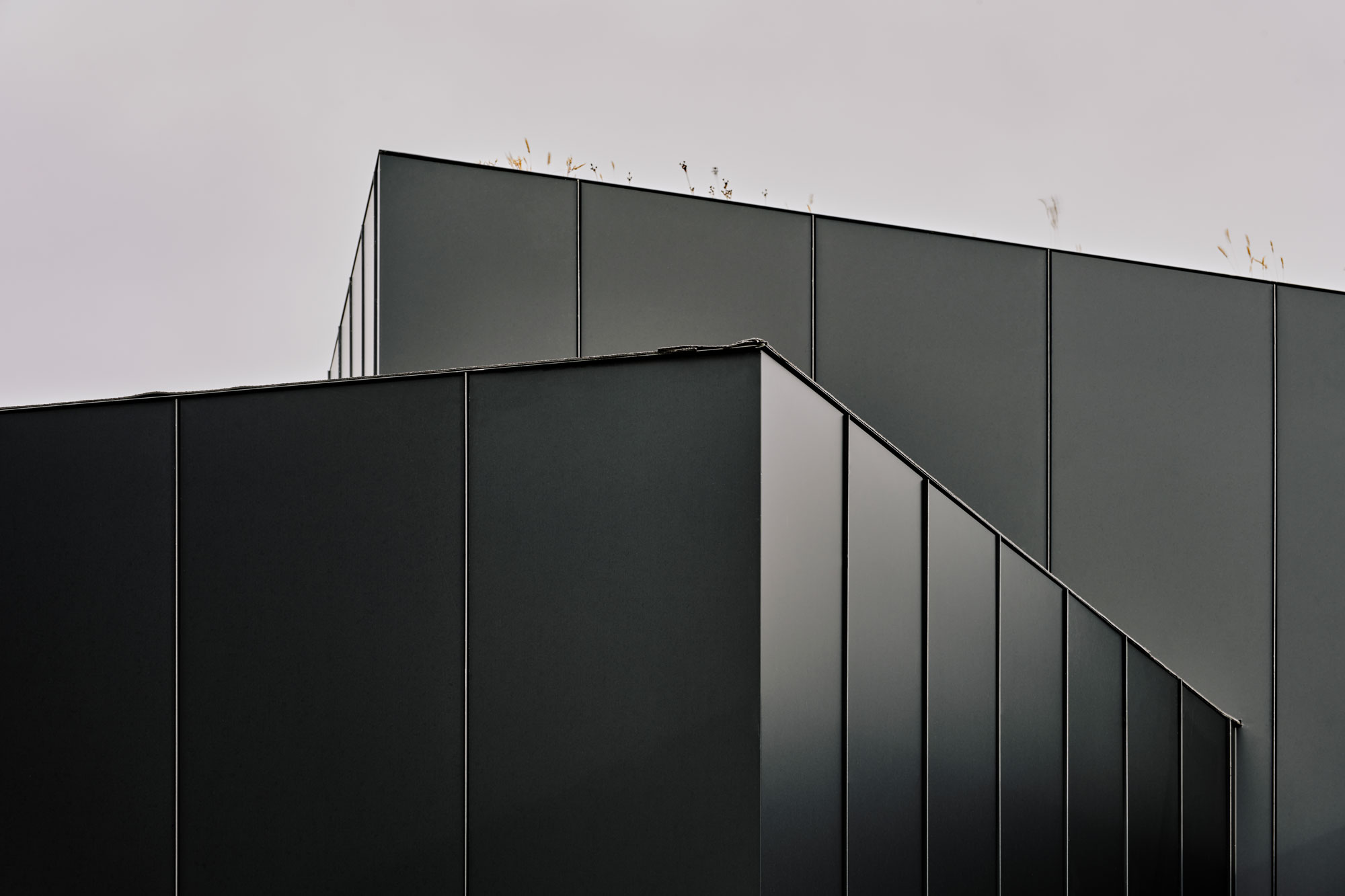
These principles guided my work on Ægisíða 44, a contemporary residential extension located in the Vesturbær neighbourhood of Reykjavík. Designed as a seamless addition to an existing house, the project uses changes in level and height to create continuity rather than contrast. Aluminium panels, concrete walls, and wooden frames are combined with a restrained palette of black, white, and brown, while green roofs, pebbles, and corrugated metal reinforce the building’s quiet presence in its surroundings.
Photographing the project meant paying close attention to transitions-between old and new, interior and exterior, structure and landscape. The interiors, designed by Rut Káradóttir, introduce a more intimate atmosphere through carefully chosen materials, textures, and muted colours. From a photography perspective, this required controlled exposure and neutral colour handling to preserve the mood without flattening it.
Rather than presenting the extension as a separate object, the images focus on how it supports daily life. The result reflects a core idea of contemporary minimalism in Iceland: architecture that feels calm, functional, and deeply connected to how people live.


Timber Architecture and CLT in Icelandic Contemporary Design
In recent years, timber architecture has taken on a renewed role in contemporary Icelandic design. Wood is no longer limited to traditional forms or interior finishes, but is increasingly used as a primary structural and expressive material. This shift reflects both practical and cultural considerations: sustainability, speed of construction, and a growing interest in warmer, more tactile buildings that sit comfortably within the landscape.
Timber as Structure and Surface
Timber and CLT-based architecture in Iceland combines modern construction methods with references to local building traditions. Rather than treating wood as decoration, these projects use it as a defining architectural element, both inside and out.
This approach is often expressed through:
- Exposed timber or CLT structures, used for clarity and construction logic
- Wooden façades, sometimes treated or burned to improve durability
- Warm interior atmospheres, contrasting with harsh external conditions
- Clear volumes and simple detailing, where material quality does the visual work
- Careful integration with landscape, allowing buildings to age naturally over time
Timber architecture in Iceland is not nostalgic. It is contemporary, precise, and often combined with concrete or metal to balance warmth with robustness.
Photography Considerations
When photographing contemporary timber and CLT architecture in Iceland, I work with a controlled and material-focused approach. These buildings rely strongly on texture, surface, and how wood reacts to light and weather. My role as a photographer is to make the material qualities readable, while keeping the architecture grounded and precise rather than expressive.
In practice, this means focusing on a few clear choices:
- keeping vertical and horizontal lines exact, especially where timber meets concrete or metal
- working with soft daylight to show grain, texture, and depth rather than strong contrast
- avoiding angles that exaggerate form and distract from material presence
- showing how exterior and interior spaces relate through openings and transitions
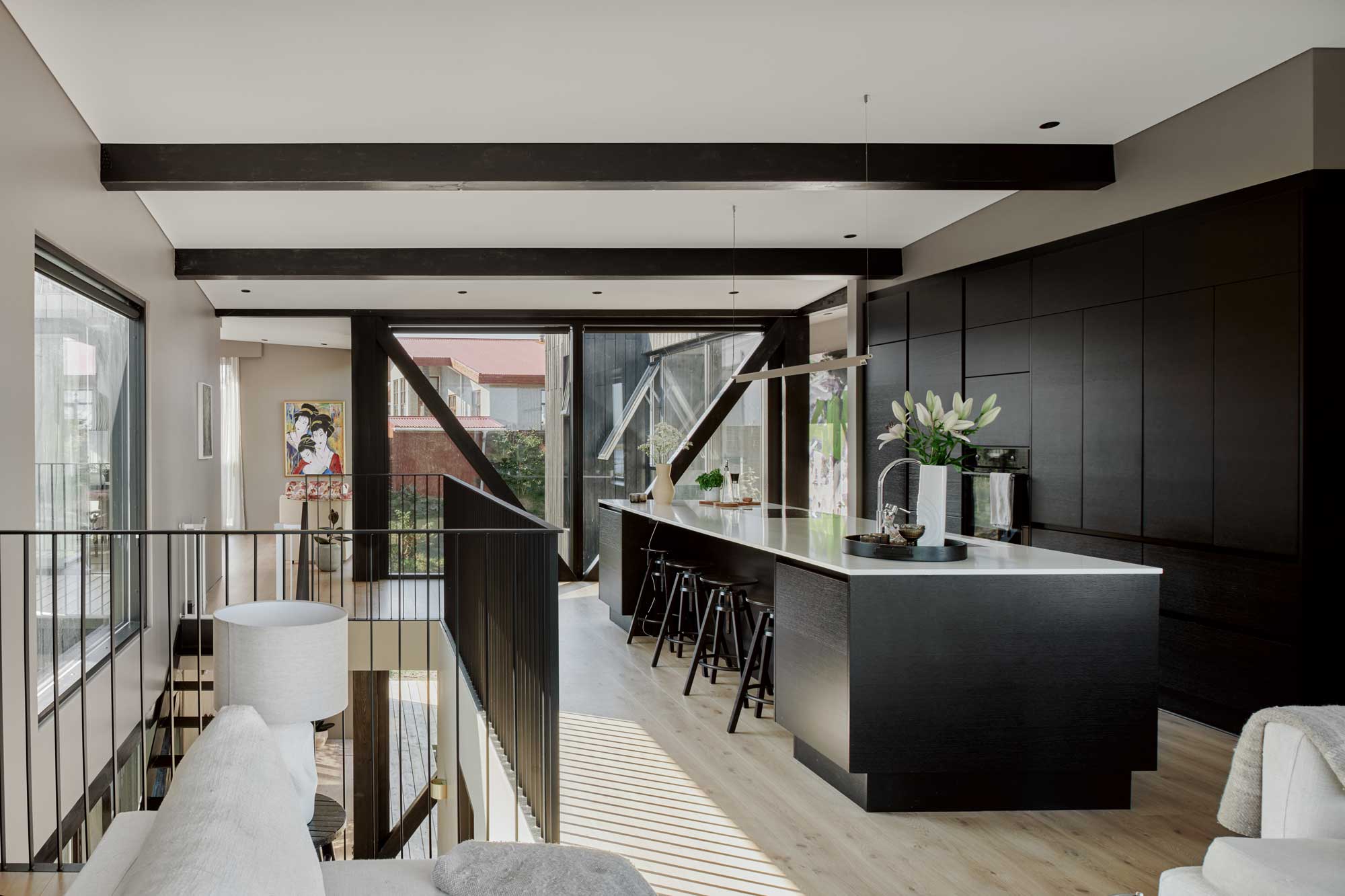
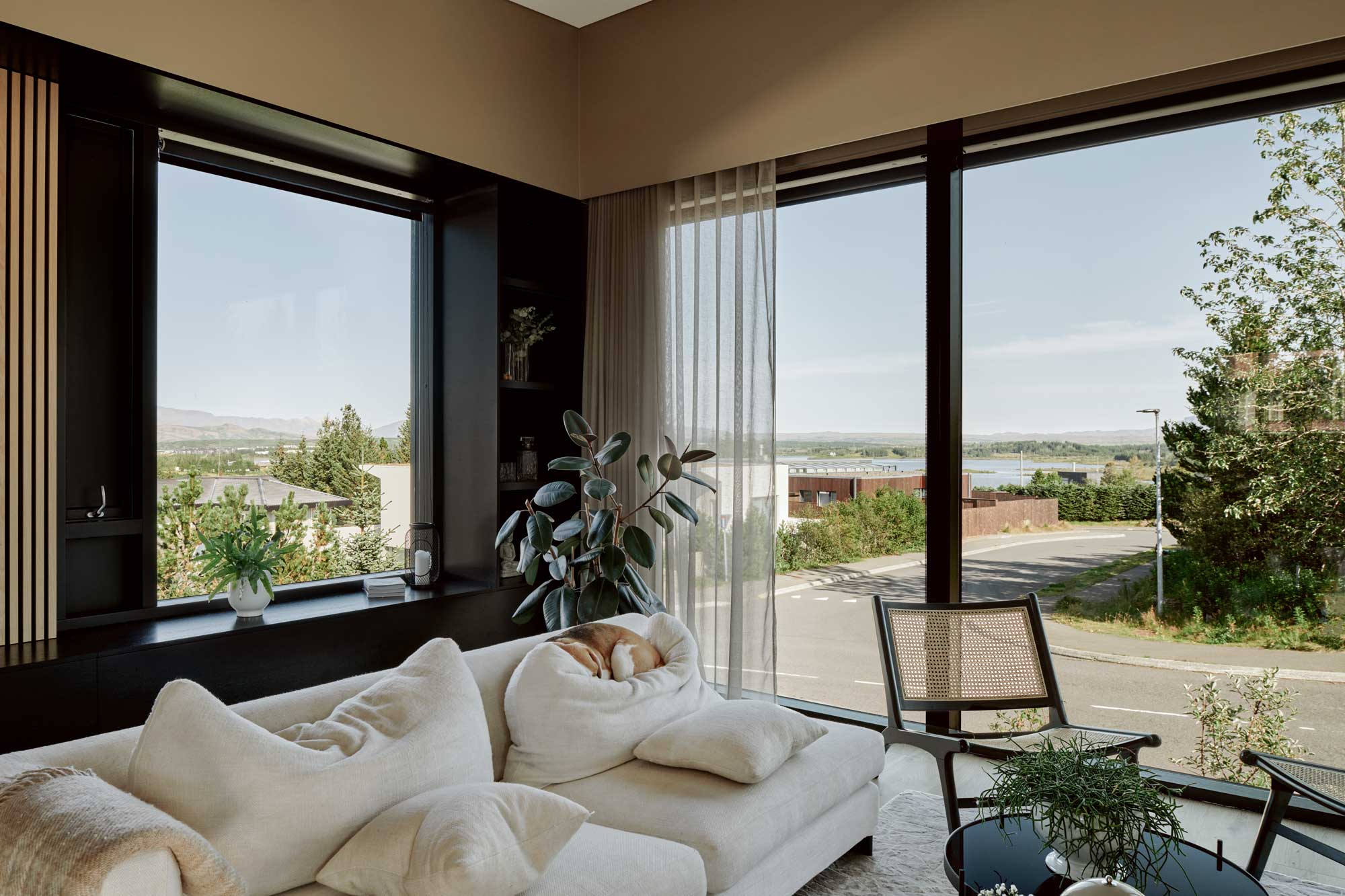
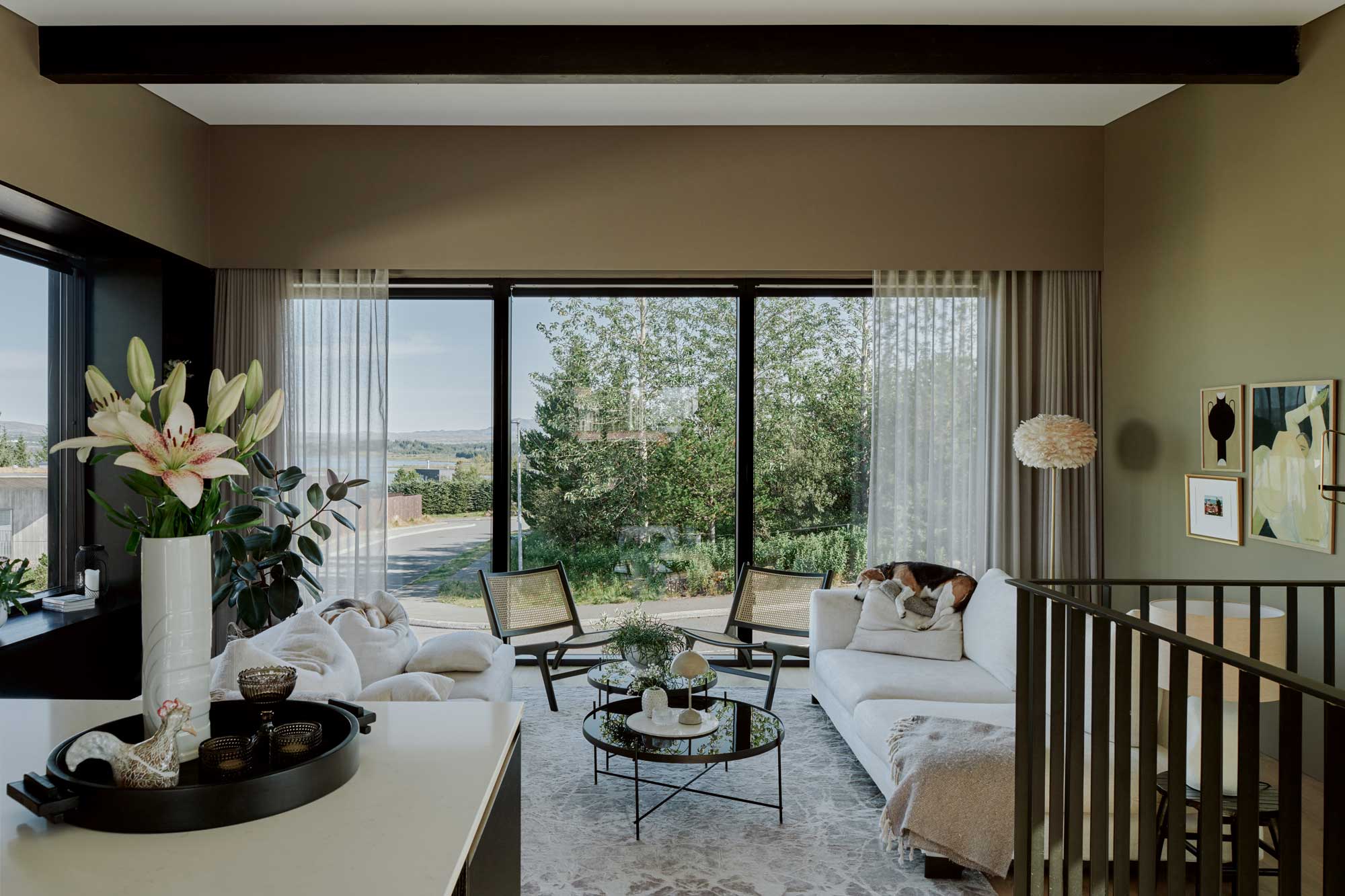
I worked with these principles in mind when photographing Gulaþing 3, a single-family house designed by Trípólí Architects. The project is defined by its burned wood façade, which gives the house a strong and tactile identity while remaining closely tied to Icelandic building traditions. While photographing the house, attention was placed on how the façade responds to changing light, allowing its texture and tone to remain readable without becoming dominant.
Large windows bring daylight into the interior and frame views of the surrounding landscape. These openings guided the compositions, helping balance the darker exterior surfaces with lighter interior spaces. Careful exposure and neutral colour handling were essential to keep the wood surfaces accurate and consistent.
Rather than isolating the house as an object, the images focus on how timber, light, and layout work together, reflecting how contemporary timber architecture in Iceland combines durability, warmth, and a close relationship with its environment.


Rural and Remote Architecture in Iceland
Much of Iceland’s contemporary architecture develops far from urban centres, in landscapes defined by distance, exposure, and strong natural presence. Rural and remote buildings are shaped by necessity: they must function reliably in isolation, respond to weather, and sit clearly within vast, open environments. Architecture here is less about visibility and more about placement, orientation, and endurance.
Architecture Defined by Isolation and Purpose
In remote contexts, buildings are often designed around a single, clear function. Cabins, service structures, and mountain facilities are reduced to essential forms, allowing them to operate quietly within sensitive landscapes.
This approach is often expressed through:
- Compact and efficient volumes, limiting exposure to wind and weather
- Robust materials, such as timber, concrete, and metal, chosen for longevity
- Clear orientation, responding to views, wind direction, and access
- Minimal detailing, reducing maintenance and visual noise
- Strong relationship with landscape, where the building acts as a marker rather than an object
Projects like Bird Watching Cabin in Skagaströnd and Highlands Base in the Kerlingarfjöll highlands illustrate this approach at different scales.

The Bird Watching Cabin is conceived as a precise intervention within a protected natural area, its geometry and placement guided by views, paths, and ecological considerations.
Highlands Base, while larger and programmatically more complex, follows the same principles of clarity and restraint, offering shelter, warmth, and orientation without overpowering its surroundings.
In both cases, architecture serves as an interface between people and landscape, carefully positioned to enhance experience rather than dominate space.

Remote Hospitality and Landscape Integration
These principles also extend to hospitality projects, where architecture must balance comfort, durability, and a strong sense of place. A clear example is Hotel Jökulsárlón, designed by Batteríið Architects and located in the south-east of Iceland, close to glaciers, mountains, and the Jökulsárlón lagoon.
The hotel is built largely from Cross-Laminated Timber (CLT), reflecting a strong focus on sustainability and contemporary construction. Its angular roofline echoes the surrounding mountain peaks, creating a clear visual link between architecture and terrain. When photographing a project like this, my approach is to let these relationships guide the images, rather than isolating the building from its context. Composition, distance, and horizon become as important as the architecture itself.
One of the hotel’s defining elements is its artificial pond, which acts as both a spatial and visual anchor. From a photography perspective, the pond becomes a tool for reading light, weather, and atmosphere. Reflections shift throughout the day, allowing the hotel to be shown in relation to sky, landscape, and changing conditions. Inside, natural materials, neutral tones, and large windows extend this relationship inward. Photographing interiors here means keeping the landscape present, using light and framing to maintain continuity between exterior and interior.
Hotel Jökulsárlón shows how rural architecture in Iceland can scale up without losing clarity. For hotel photography, this means focusing less on spectacle and more on balance: how the building shelters, frames views, and supports the guest experience. Rather than treating the hotel as a standalone object, the images aim to show how architecture, landscape, and atmosphere work together to define the place.


Working Together on Architectural Projects in Iceland
Buildings in Iceland are rarely isolated objects. They are designed to work with their surroundings, to endure harsh weather, and to support everyday life. Understanding this context is essential not only when designing architecture, but also when documenting it.
Architectural photography in Iceland requires time, local knowledge, and a careful reading of how buildings relate to place. Light changes quickly, weather is unpredictable, and architecture often reveals itself through subtle relationships rather than bold gestures. My work focuses on making these relationships visible-showing proportion, material, atmosphere, and how architecture sits within its environment.
If you are working on a project in Iceland and need photography that reflects its architectural intent and context, feel free to get in touch. I’m always happy to discuss projects, locations, and the best way to document and communicate the ideas behind your architecture.


