
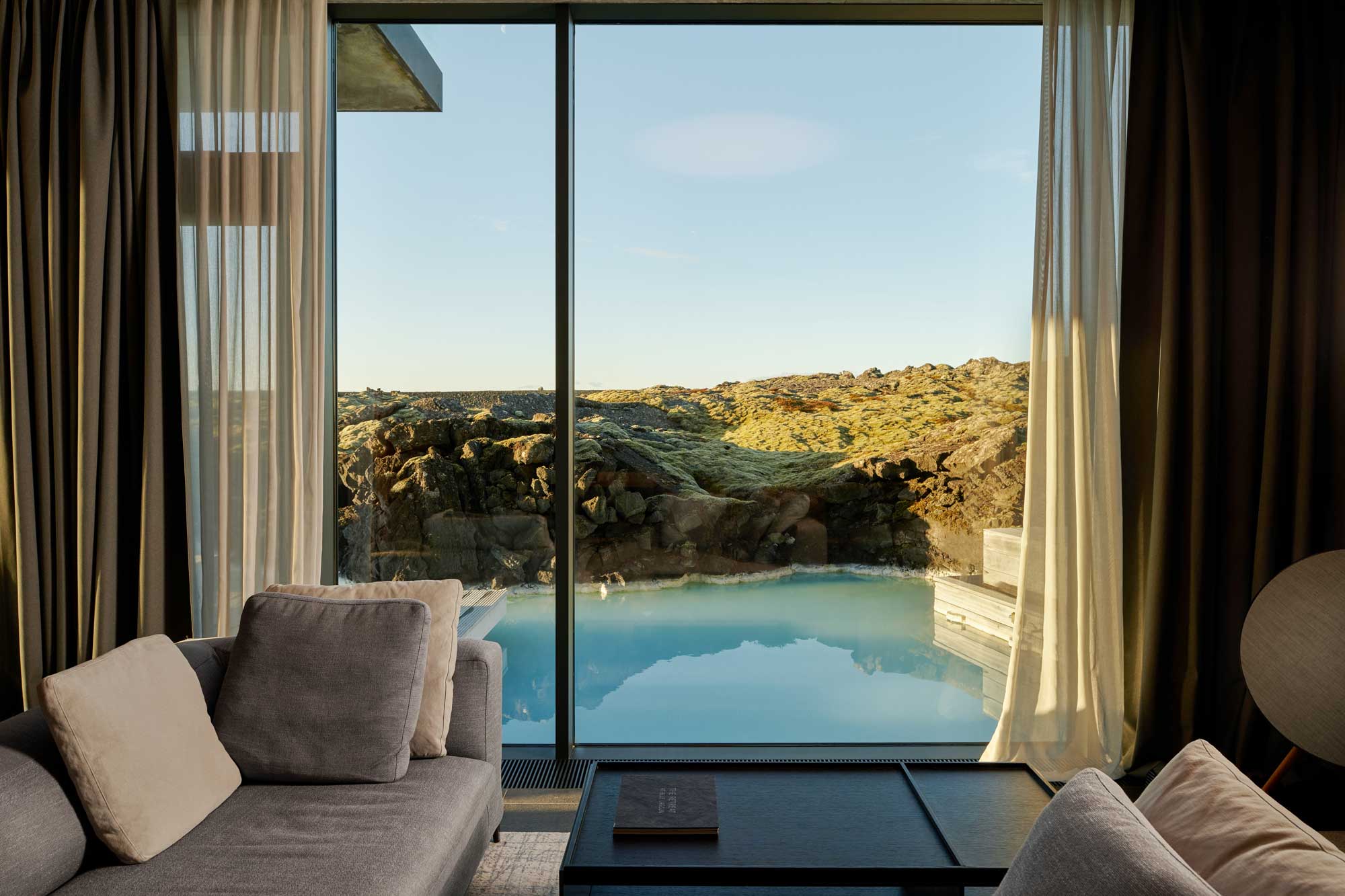
Iceland is one of the few destinations where location is not just a detail, but a core reason why people travel. Guests come for space, landscape, light, and the feeling of being somewhere distinctly different from everyday life. For hotels, this means that the setting is not separate from the experience – it is the experience.
Before guests read descriptions or compare amenities, they look at images to understand where the hotel sits and what kind of environment surrounds it. A coastal view, open highlands, lava fields, or geothermal terrain immediately shape expectations. Hotel photography in Iceland therefore goes beyond rooms and interiors. It plays a central role in helping guests feel the place before they arrive.
When location is photographed with care and accuracy, it becomes a real asset. It helps hotels stand out, communicate their identity, and attract guests who are already aligned with what the place offers. The goal is not to idealise the setting, but to translate it clearly – showing how landscape, architecture, and atmosphere come together as a single experience.
What Travelers Look For in an Icelandic Hotel Location
For many travellers, choosing a hotel in Iceland starts with the setting rather than the room itself. Location is not a secondary detail, but part of the experience they are actively searching for. Guests want to feel that they are somewhere distinct, shaped by landscape, light, and distance from everyday routines.
Unlike destinations where proximity to attractions or transport is the main driver, Iceland attracts visitors who value space, quiet, and a strong connection to nature. They are looking for places that feel rooted in their surroundings and offer something that cannot be replicated elsewhere. Photography is often the first tool guests use to assess whether a hotel’s location aligns with these expectations.
Something That Feels Unique to Iceland
Travellers coming to Iceland often arrive with a clear idea in mind: they want to experience landscapes and environments that feel different from anywhere else. Open land, volcanic textures, glaciers, mountains, and raw coastlines are not just background elements, but key reasons for the trip itself.
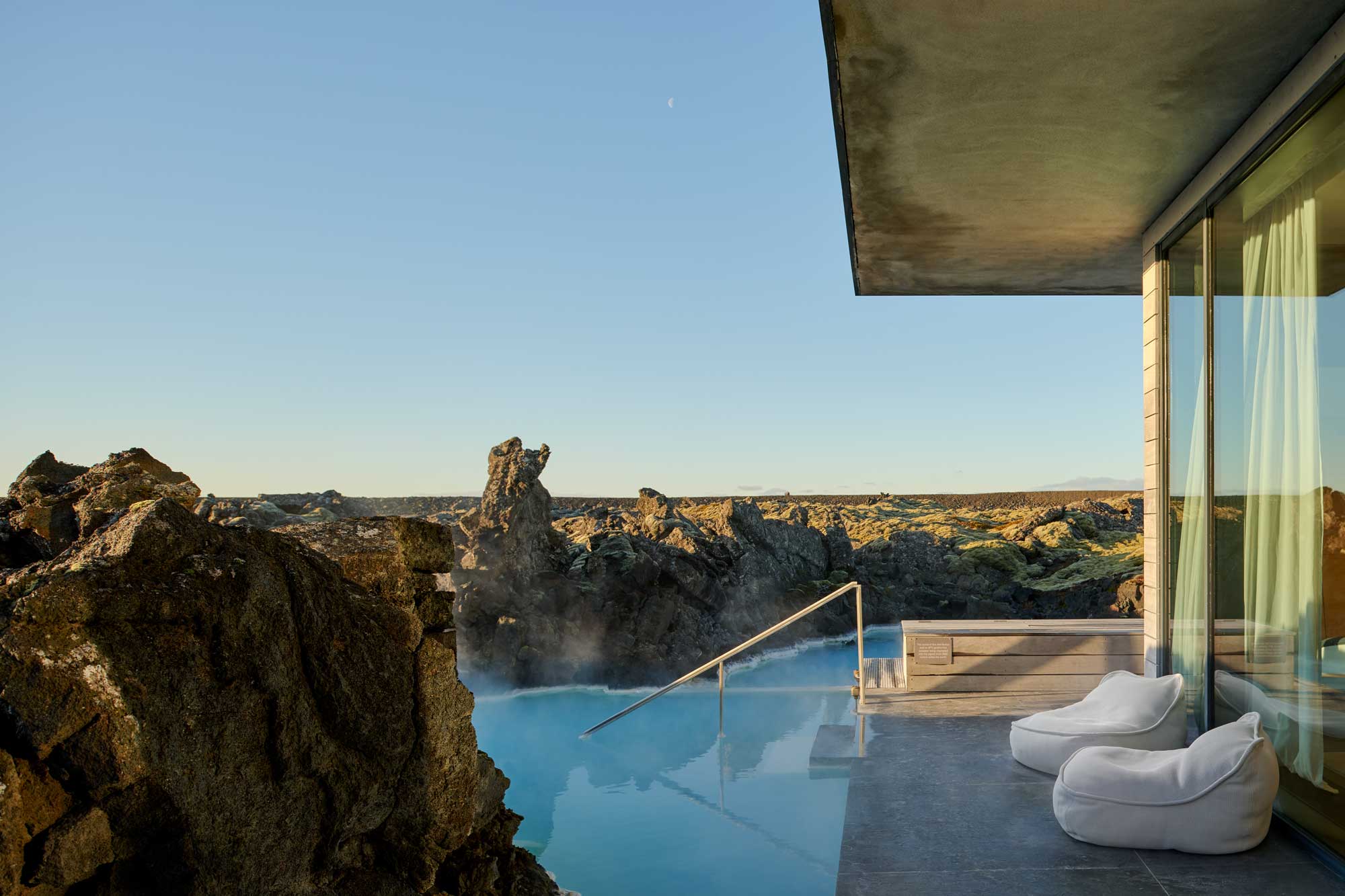
Hotel photography needs to reflect this sense of specificity. Rather than isolating the building as an object, images should show how it relates to its surroundings. A hotel framed against lava fields, set beneath a wide sky, or positioned near water immediately communicates that the experience is tied to Iceland’s geography.
When this sense of place is visible, guests can quickly understand what makes the location special and whether it matches their expectations. The hotel becomes part of the Icelandic experience, not just a place to sleep.
Quiet, Space, and a Sense of Freedom
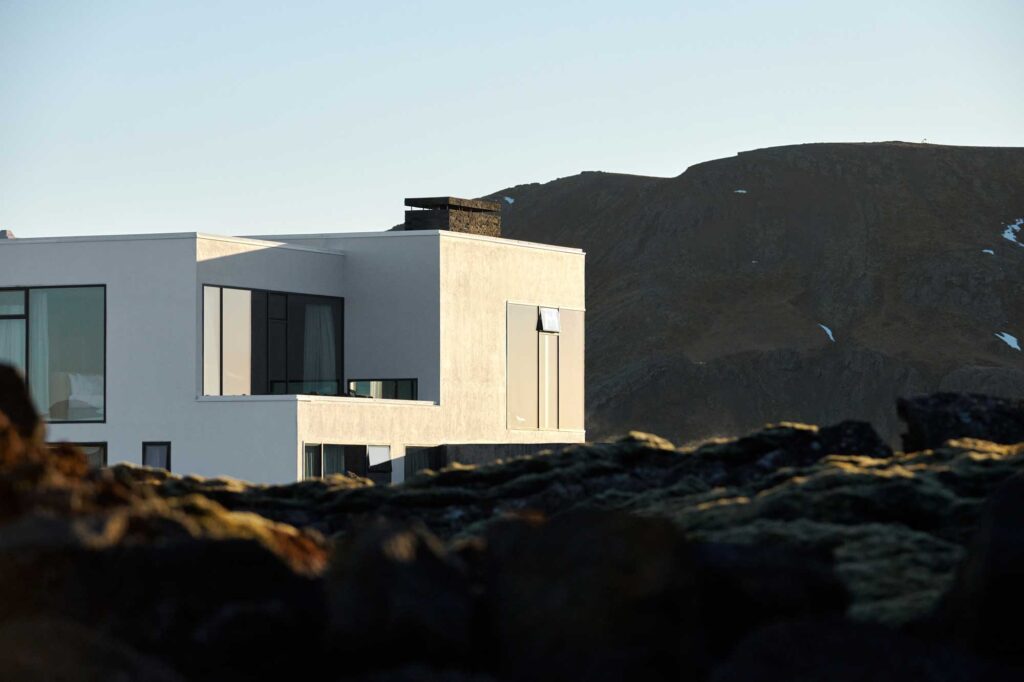
Another reason travellers are drawn to Iceland is the feeling of openness. Many guests are actively seeking relief from noise, density, and visual overload. Wide views, minimal development, and the absence of clutter play an important role in how they evaluate a location.
Photography can express this without exaggeration. Calm compositions, wider frames, and careful spacing allow images to convey scale and stillness. Showing distance between the hotel and surrounding elements helps communicate privacy and quiet, even before guests arrive.
When space is shown clearly, travellers understand that the hotel offers room to slow down, breathe, and disconnect. This is often a deciding factor for guests choosing between otherwise similar properties.

A Close Connection to Nature
Iceland’s geography is not something visitors observe from afar. Many travellers want to feel close to natural elements throughout their stay, whether that means geothermal areas nearby, open water, shifting light, or changing weather.
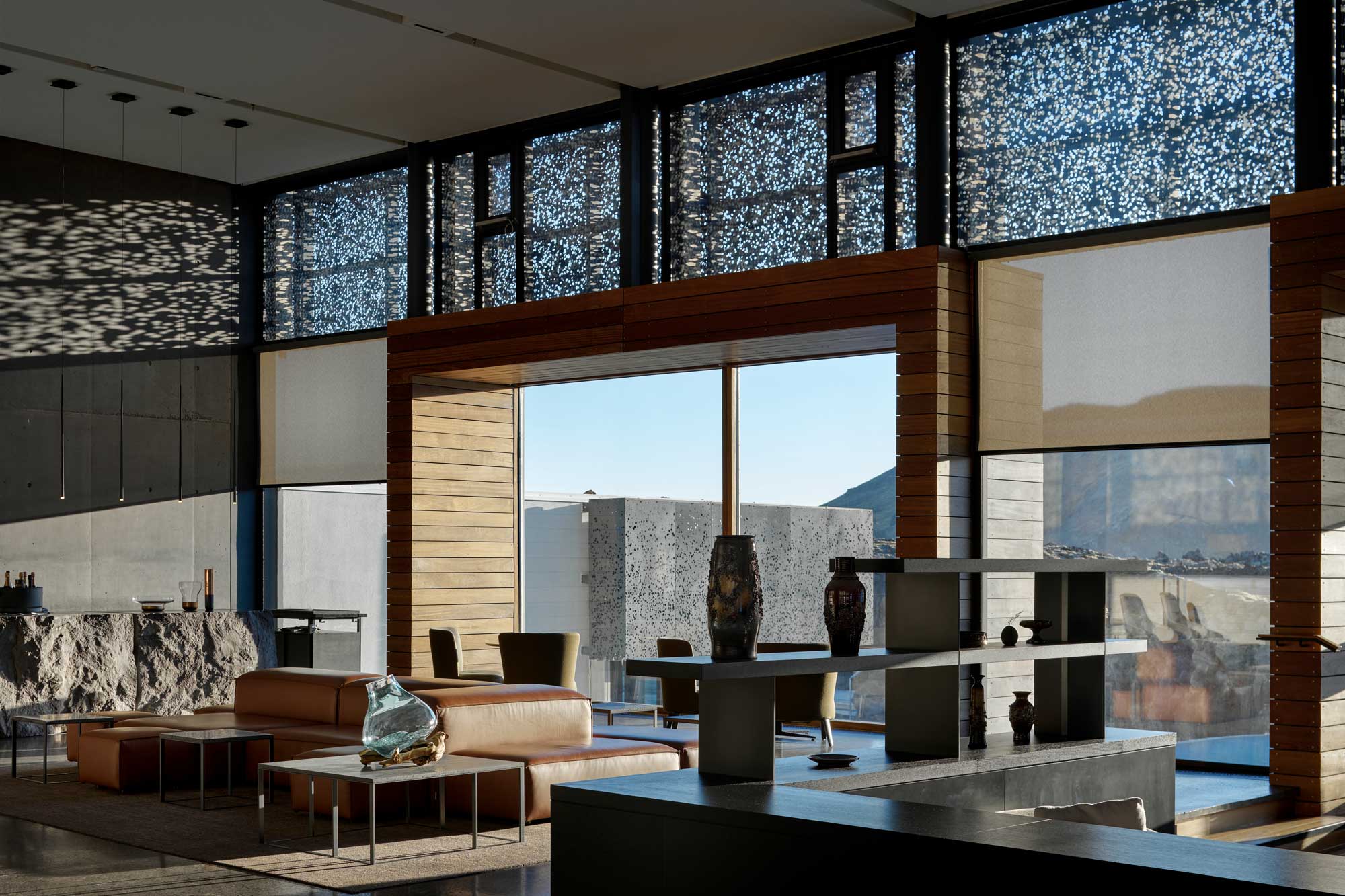
Photography helps make this proximity visible. Showing how close the hotel is to the coast, how views open directly onto mountains, or how light enters rooms throughout the day gives guests a realistic sense of what it feels like to be there.
These images do more than describe location. They help guests imagine daily rhythms: waking up to changing light, watching weather move across the landscape, or stepping outside into open terrain. When this relationship with nature is clear, the hotel feels integrated rather than detached.
Together, these elements shape how travellers read a hotel’s location. When photography communicates uniqueness, space, and closeness to nature in a clear and honest way, guests can recognise whether the place matches what they are looking for – long before they arrive.

Highlighting Your Hotel’s Surroundings the Right Way
Once a hotel’s location is a key part of its appeal, the challenge becomes how to show it clearly and honestly. In Iceland, surroundings can easily dominate the image or, if handled poorly, feel flat and unconvincing. The goal of hotel photography here is not to impress through spectacle, but to help guests understand how the hotel sits within its environment.
This requires attention to light, perspective, and restraint. When the surroundings are photographed with care, they become an asset that strengthens the hotel’s identity rather than distracting from it.
Using Light to Show the Landscape
Light plays a decisive role in how Icelandic landscapes are perceived. Soft morning and evening light reveals form, texture, and depth without flattening the scene. In summer, long daylight hours offer many possible moments to photograph exteriors and views, but not all light is equally useful.
Planning images around sun direction helps maintain balance between building and landscape. When light is chosen carefully, the environment feels calm and legible, and the hotel appears naturally placed within it. This makes surroundings feel inviting rather than overwhelming.


Showing the Real View, Not an Idealised One
Guests want to know what they will actually see, not an exaggerated or heavily altered version of the view. Overly wide lenses, extreme cropping, or strong colour shifts can create expectations that reality cannot meet.
Good hotel photography respects the real angle, distance, and scale of the surroundings. Colours remain natural, contrasts are controlled, and editing is kept subtle. When views match the experience on arrival, guests feel oriented rather than misled, which supports a better stay and fewer disappointments.


Including Natural Elements in the Frame
Natural elements help define the character of a hotel’s setting. Moss, rock, water, snow, mountains, or open land all carry strong visual meaning in Iceland and can be used to anchor the building within its context.
Rather than separating architecture from landscape, photography works best when the two are shown together. Carefully chosen compositions allow the hotel to feel connected to its environment, whether through foreground elements, reflections, or shared lines between structure and terrain.
When surroundings are included with intention, the images describe more than location. They communicate atmosphere, pace, and the kind of experience guests can expect – turning the setting into a clear part of the hotel’s story.
Today, many images rely on heavy warm filters or exaggerated colour grading to create instant emotional impact. While this may look attractive at first glance, it often changes the real character of Icelandic light and landscape. Natural elements such as lava, water, and sky shift away from their true tones. When guests arrive and see something different from what was presented online, expectations shift as well.
My approach is different. I focus on preserving the natural colours and tonal balance of the environment. Iceland’s light is already distinctive – cool, soft, sometimes dramatic, sometimes subtle. It does not need to be reinterpreted. By keeping colours authentic and contrasts controlled, the images remain credible, authentic, and aligned with the actual guest experience.
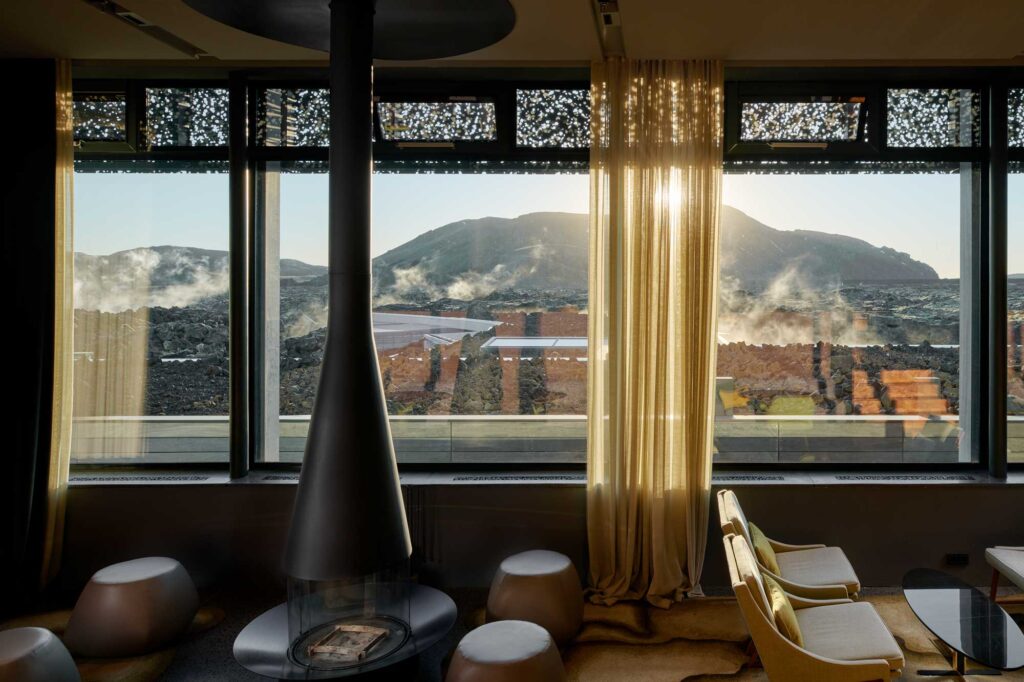
Telling the Story of a Hotel’s Setting Through My Lens
In Iceland, location is never neutral. Landscape, light, and weather actively shape how a hotel is experienced, not just how it looks. My role as a hotel photographer is to translate that relationship into images that feel legible and believable to future guests.
Rather than applying a fixed visual style, I adapt my approach to the environment the hotel sits in and to how that environment becomes part of the daily experience. The goal is always the same: to show how architecture and setting support each other.
Mountain and Highland Hotels
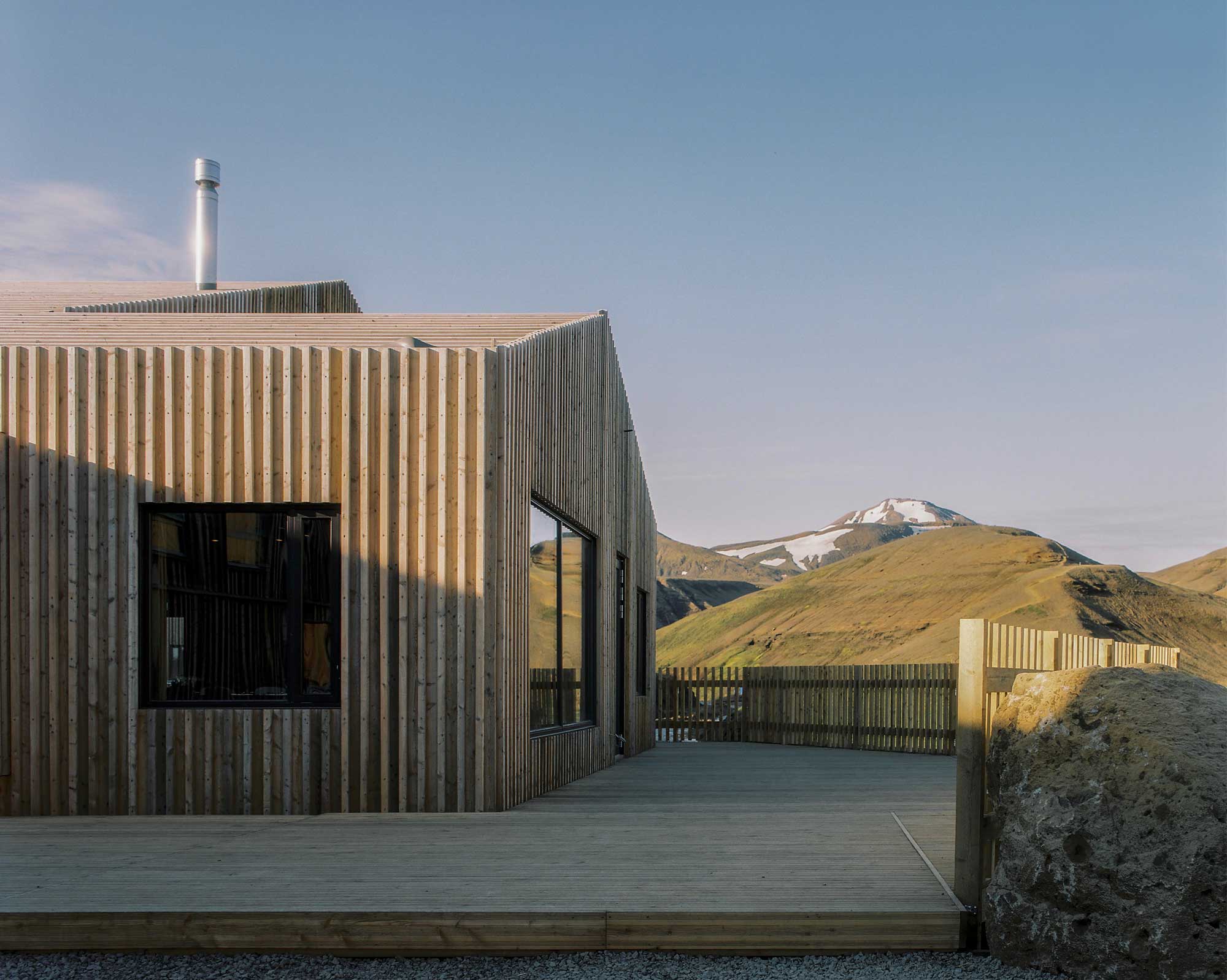
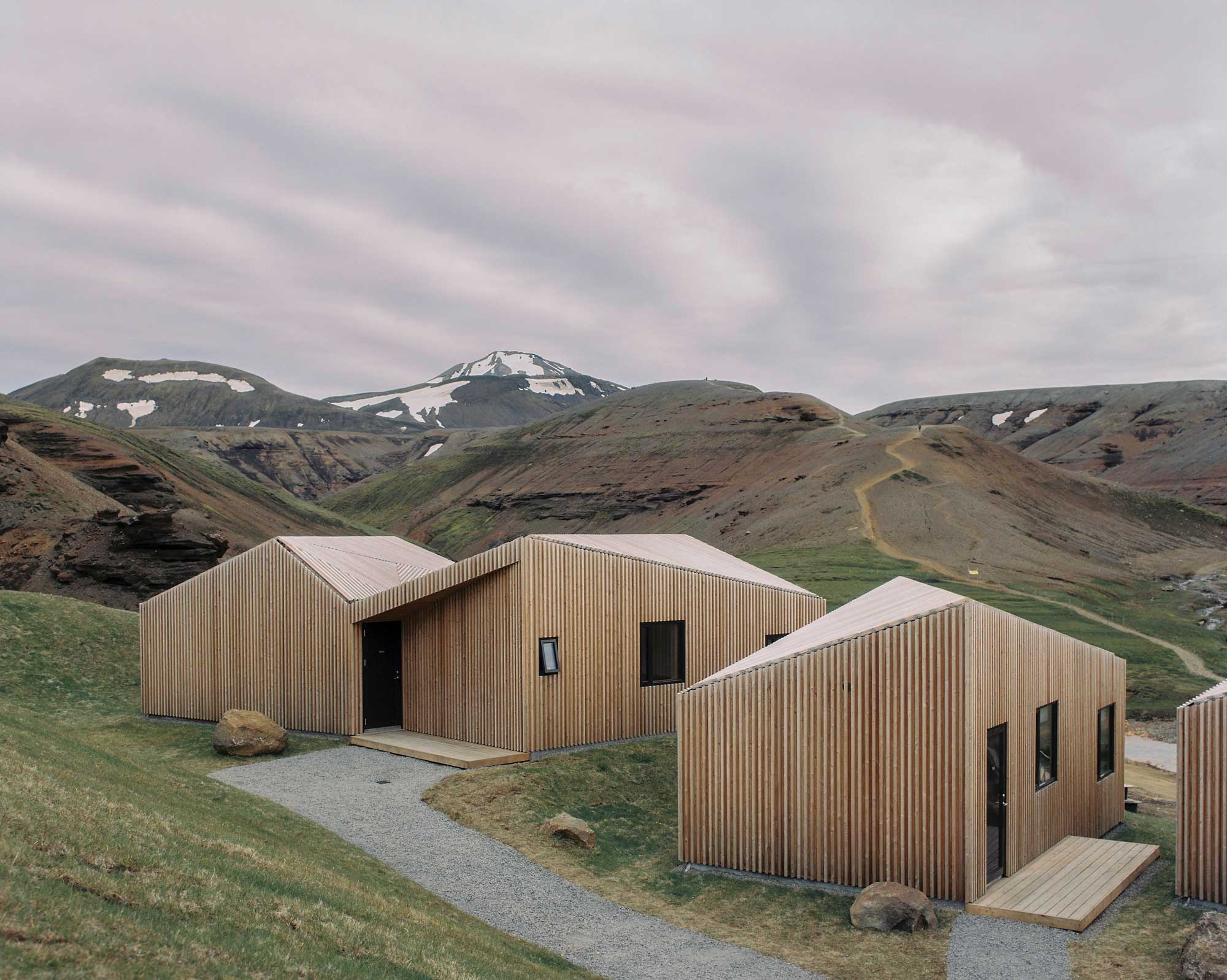
Highland environments demand a careful balance between exposure and shelter. At Highlands Base, located at the edge of Kerlingarfjöll, the surrounding landscape is vast, rugged, and unforgiving, while the hotel itself is designed as a place of warmth and recovery.
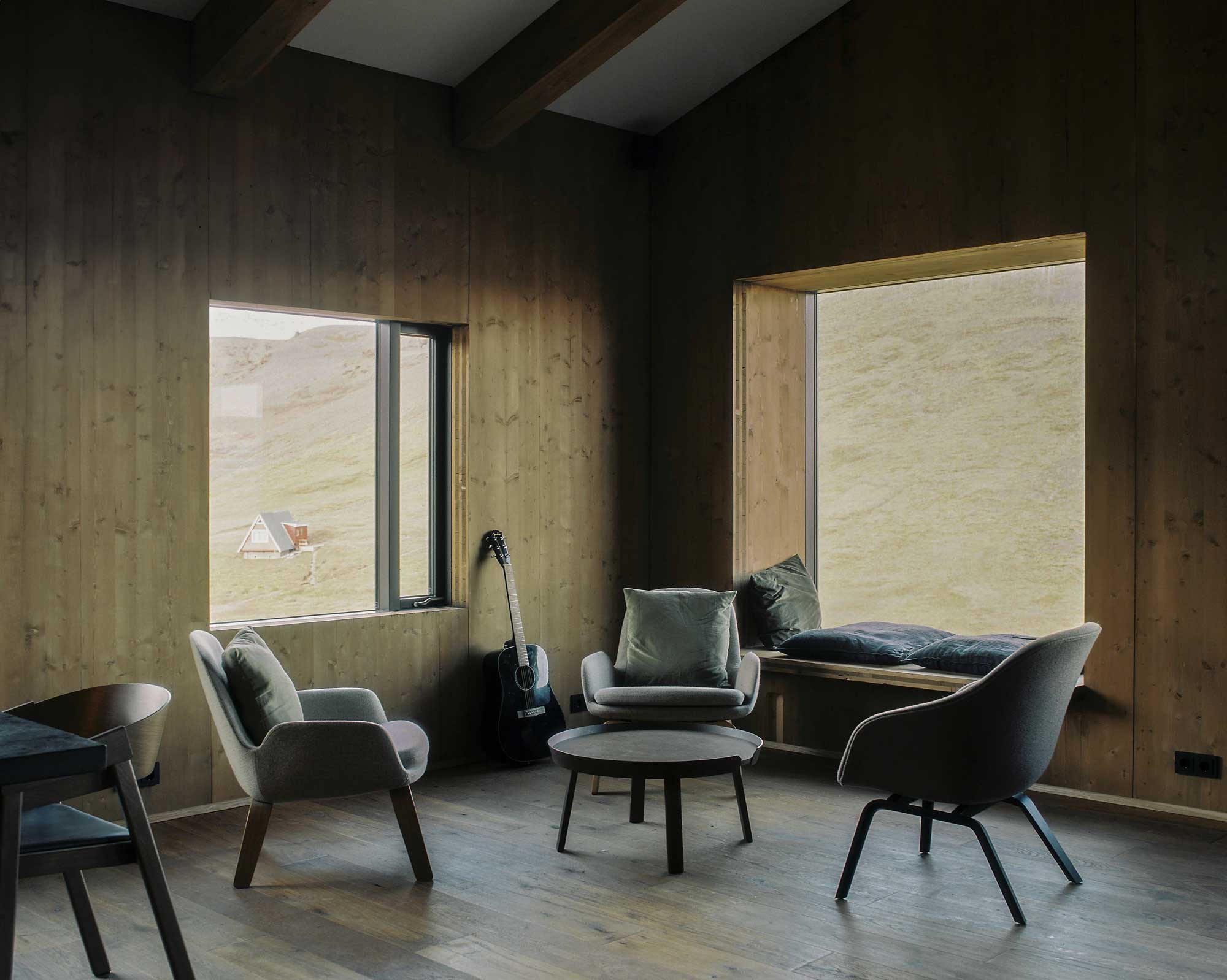
When photographing this project, I focused on contrast rather than scale alone. Wide exterior views were used to communicate distance, isolation, and the openness of the highlands. At the same time, interior images were framed to show protection, warmth, and calm-how the hotel becomes a refuge within a demanding environment.
Rather than emphasising dramatic peaks or weather, the images aim to show how guests move between outside and inside, how the building sits in the valley, and how comfort is experienced after a day in the landscape. This approach helps future guests understand not just where the hotel is, but what it feels like to stay there.

Volcanic and Geothermal Landscapes
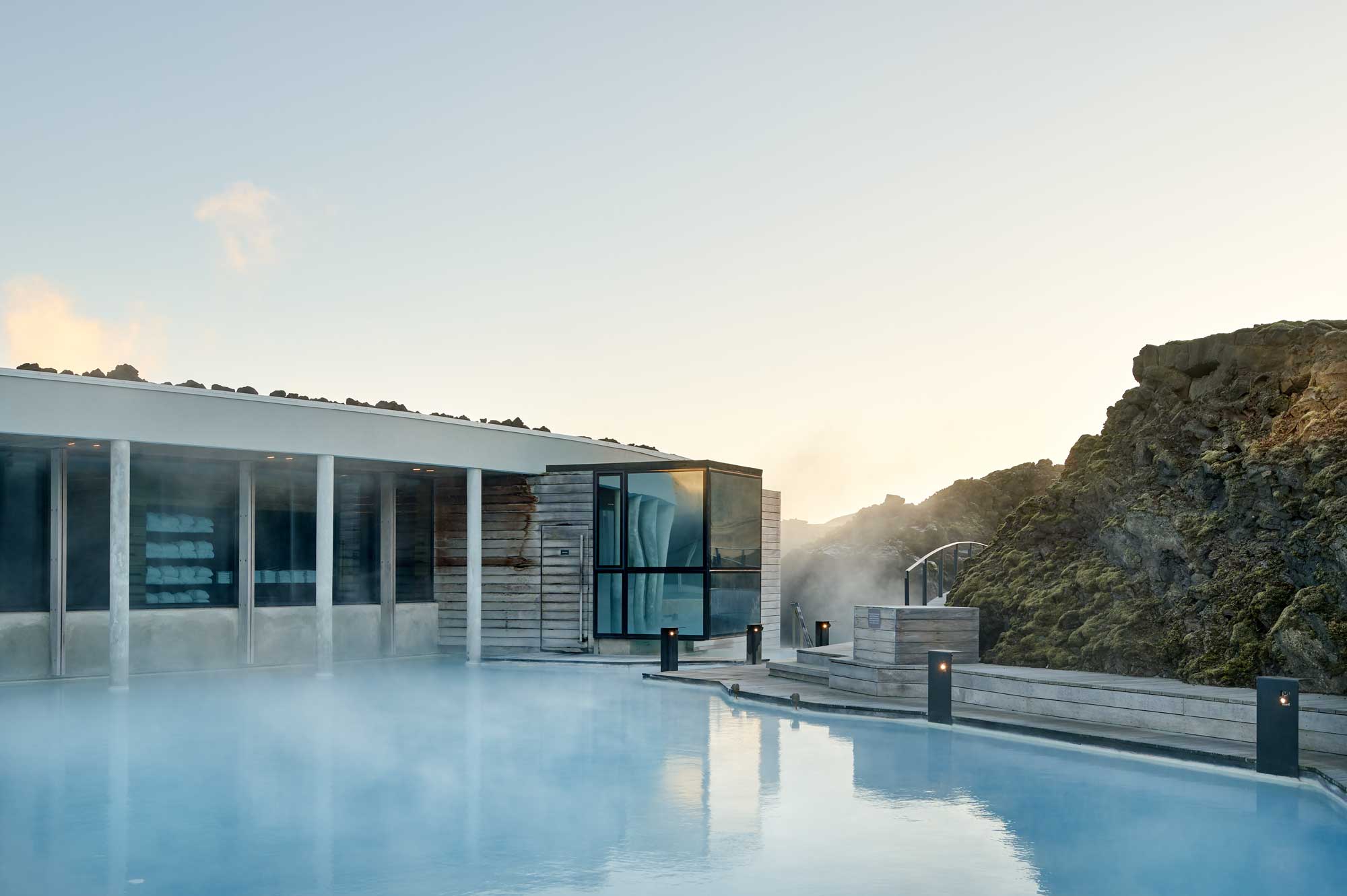
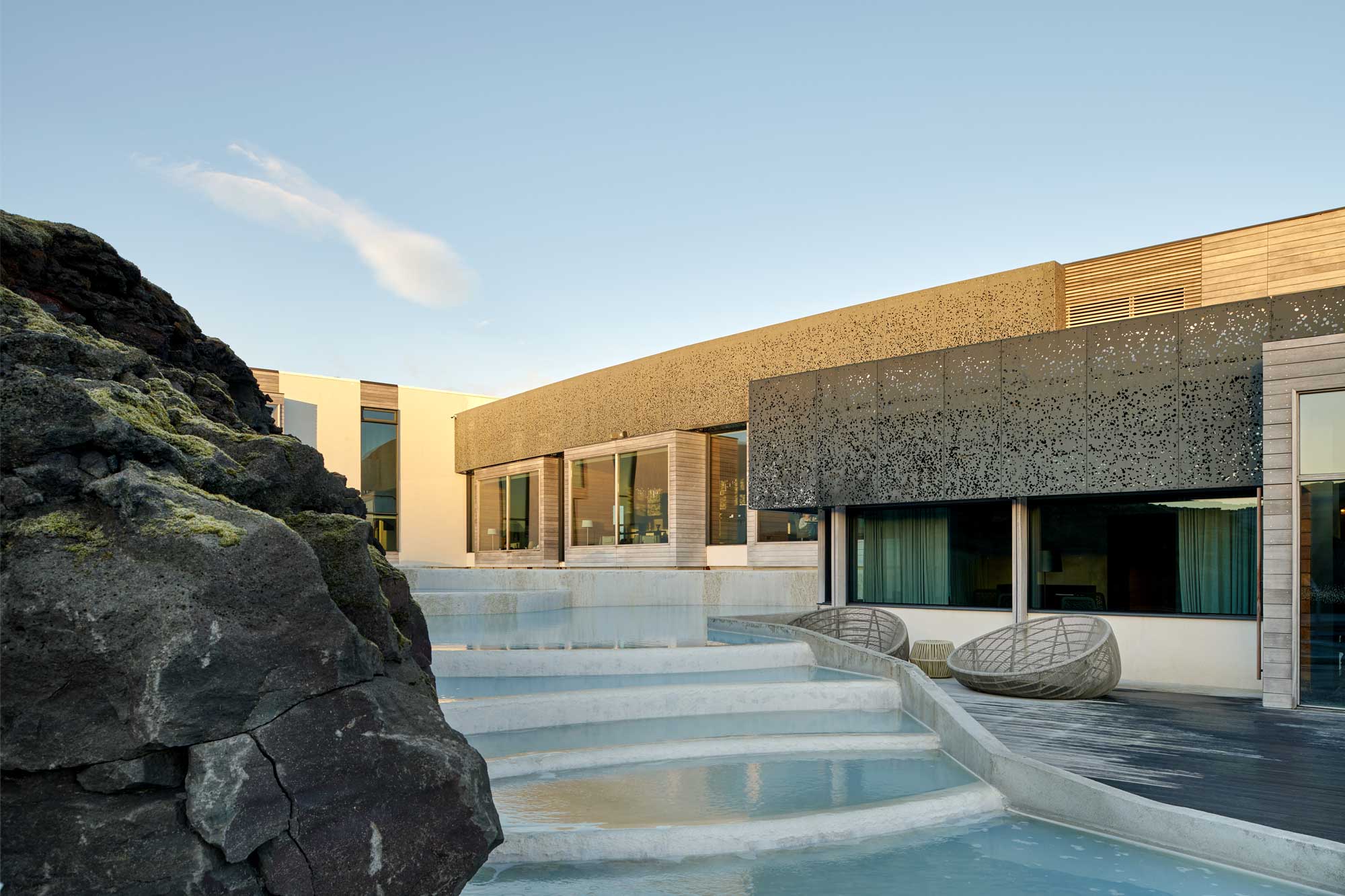
Working as a hotel photographer in Iceland has taught me that no place can be captured in a single moment. Light shifts quickly, weather changes without warning, and the same view can tell a very different story within a few hours. Because of this, my approach is not about producing images fast, but about understanding how a place actually behaves.
When I photograph a hotel, I think about how guests arrive, where they slow down, what they notice first, and how the surroundings influence their stay. I plan shoots around real movement and real use, adapting to conditions on site instead of forcing a fixed visual idea onto the space.
This way of working leads to images that feel calm, accurate, and usable over time. They help guests understand what the hotel is and where it is, long before they arrive. For hotels, this means clearer expectations, stronger positioning, and visuals that continue to work across websites, booking platforms, and long-term communication.
Open Landscapes and Rural Isolation
Hvitárnes sits in a wide, quiet rural setting where the defining qualities are space, silence, and distance. There are no dramatic landmarks competing for attention-what matters here is atmosphere and rhythm.
For this project, I worked with open compositions and minimal visual interruption. The surrounding fields, distant mountains, and changing sky were included not as scenery, but as part of how time is felt at the villa. Interiors were photographed in relation to exterior views, reinforcing the idea that the landscape is always present, even when inside.
Rather than pushing luxury cues, the images focus on stillness and continuity. This helps guests understand that the experience here is about slowing down, privacy, and connection to the land. Photography, in this case, supports the villa’s quiet confidence by staying measured and understated.


How I Work With Hotel Managers and Marketing Teams
As a hotel photographer, I see my role as shaping visual positioning rather than simply documenting spaces.
Every project begins with alignment. I work closely with hotel managers and marketing teams to understand the property’s mission, target audience, and long-term goals. What feeling should the images communicate? What level of experience should they position the hotel within?
I often ask managers to show me images they like — not necessarily from hotels, but from architecture, design, or travel. These examples reveal what they respond to visually and help us shape a consistent photographic direction.
From there, the process becomes strategic.
Together, we review room categories, views, and spatial priorities. A suite facing a glacier requires different timing than a room overlooking a courtyard. Spa areas, rooftops, restaurants, and lobbies each demand their own technical and visual approach. This planning phase clarifies two essential elements: how many shooting days are realistically required, and what setup each space demands.
For example:
- A restaurant session may involve dedicated food & beverage styling, coordination with the kitchen team, and controlled lighting to ensure dishes look refined without appearing artificial.
- A spa demands careful preparation before the first frame is taken. Presentation and cleanliness must be impeccable, and steam and humidity need to be managed intentionally. Too much steam can quickly make images foggy and flat, so timing and ventilation become part of the technical planning.
- Guest rooms require coordination with housekeeping well in advance. Everything must be perfectly arranged, and bed linens must be ironed and free of wrinkles. Small details matter. A clean, well-prepared bed significantly improves perceived comfort — and that perception directly influences booking decisions.
By mapping these elements in advance, photography becomes efficient, coherent, and aligned with budget expectations. It ensures that the most valuable spaces – the ones that truly differentiate the hotel – receive the attention they deserve.
My role is not only to create refined images, but to help hotels prioritise what matters visually and commercially. When photography reflects brand identity, spatial hierarchy, and genuine location strengths, it becomes a long-term asset rather than a short-term campaign.
If you are looking for a hotel photographer in Iceland who understands both visual positioning and commercial strategy, you can explore my hotel photography work or get in touch to discuss your project. I work with hotels across Iceland, Greenland, Farie Islands and Norway, helping them turn location and atmosphere into a clear visual advantage.


